

Bilal turns Linhart Hall into a living conversation between soul, jazz, and improvisation

Saturday, 4 July | 18:00 | 67th Ljubljana Jazz Festival, Cankarjev dom, Linhart Hall
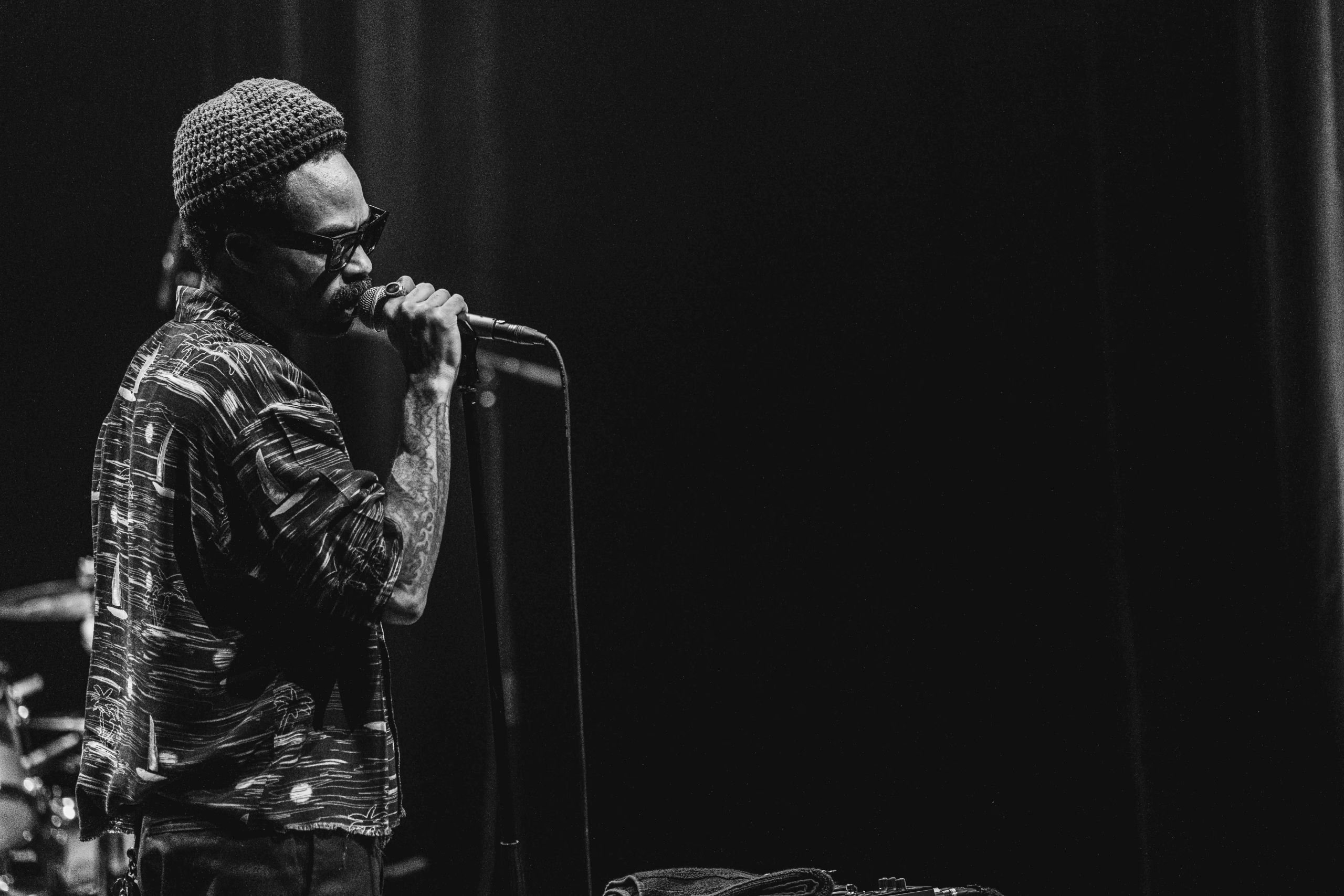
As part of the 67th Ljubljana Jazz Festival, Bilal brought one of the festival’s most genre-defying performances to a packed Linhart Hall at Cankarjev dom. Every seat was occupied and the anticipation was palpable as the lights dimmed. Joined by guitarist Randy Runyon, bassist Conley “Tone” Whitfield, and drummer Joseph “Joe Blaxx” Grissett, Bilal immediately captivated the audience with a performance that effortlessly blended neo-soul, R&B, funk, and jazz.
Although Bilal has built a career spanning neo soul, R&B, rock, and jazz, he has always described himself as “a jazz musician first.” That perspective was evident not through extended improvisation, but through the musicianship and openness of the performance. His band delivered powerful, deeply rooted grooves that provided the foundation for Bilal’s expressive vocals, from his commanding lower register to the unmistakable colors of his falsetto. Moving effortlessly between intensity and vulnerability, he demonstrated why his voice has remained one of the most distinctive in contemporary soul music.
This approach comes from a musical history deeply connected to the evolution of modern Black music. Bilal’s debut album, 1st Born Second (2001), introduced him as one of the most promising voices of the neo soul movement, with guidance from producers including Dr. Dre, James Poyser, and J Dilla. During the late 1990s, he was immersed in New York’s vibrant creative scene and became part of The Soulquarians, the influential collective that brought together artists such as D’Angelo, Erykah Badu, Questlove, Mos Def, Talib Kweli, J Dilla, and Raphael Saadiq.
That period reshaped the possibilities of contemporary soul music, blending jazz’s improvisational language with hip hop’s rhythmic foundation and the emotional depth of classic R&B. Bilal has remained one of the artists carrying that spirit forward. His Grammy-winning contribution to Kendrick Lamar’s These Walls from To Pimp a Butterfly, his celebrated appearance with The Roots on Tiny Desk, and his latest album Adjust Brightness all represent different chapters of a career built on exploration rather than repetition.


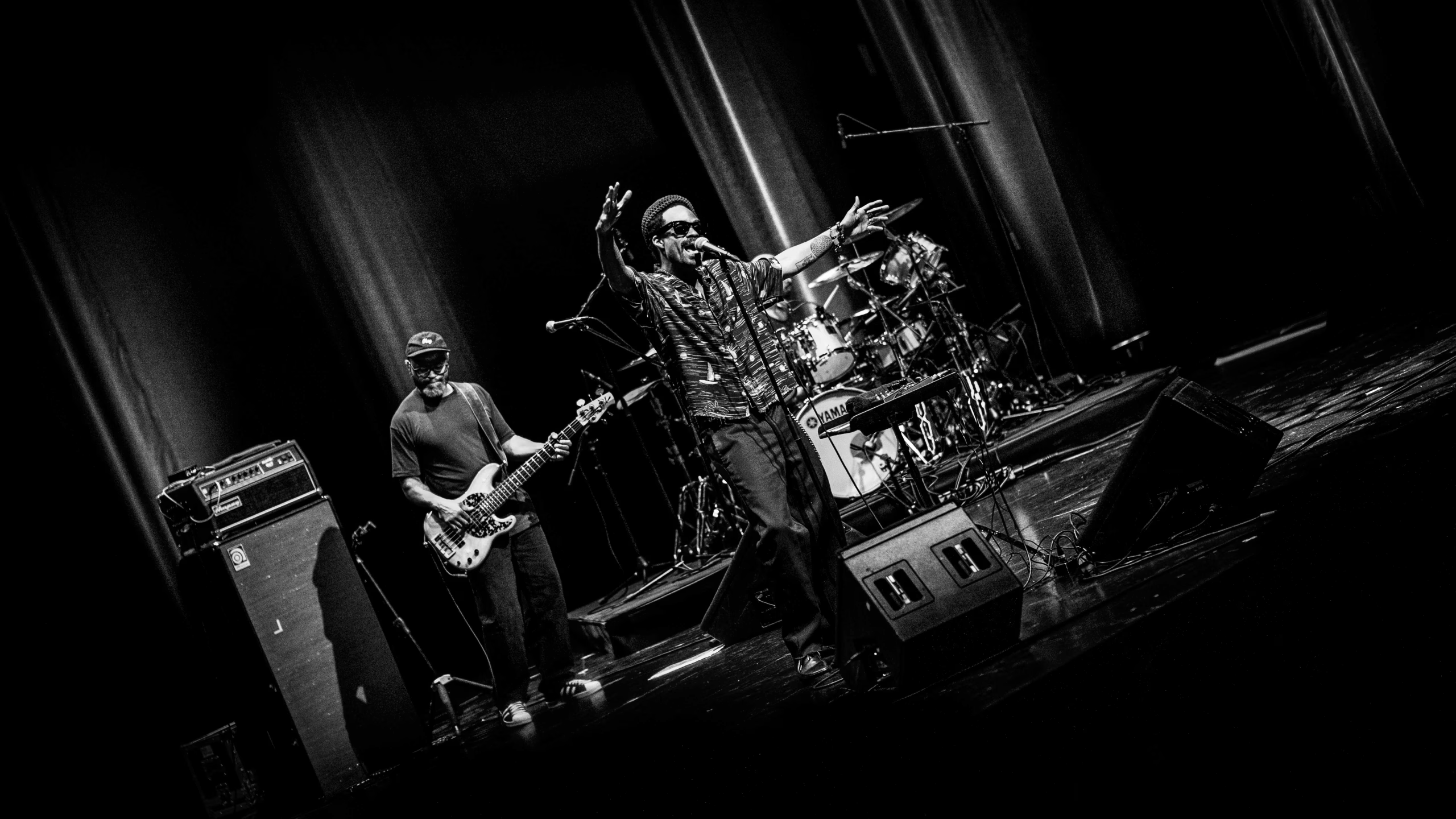


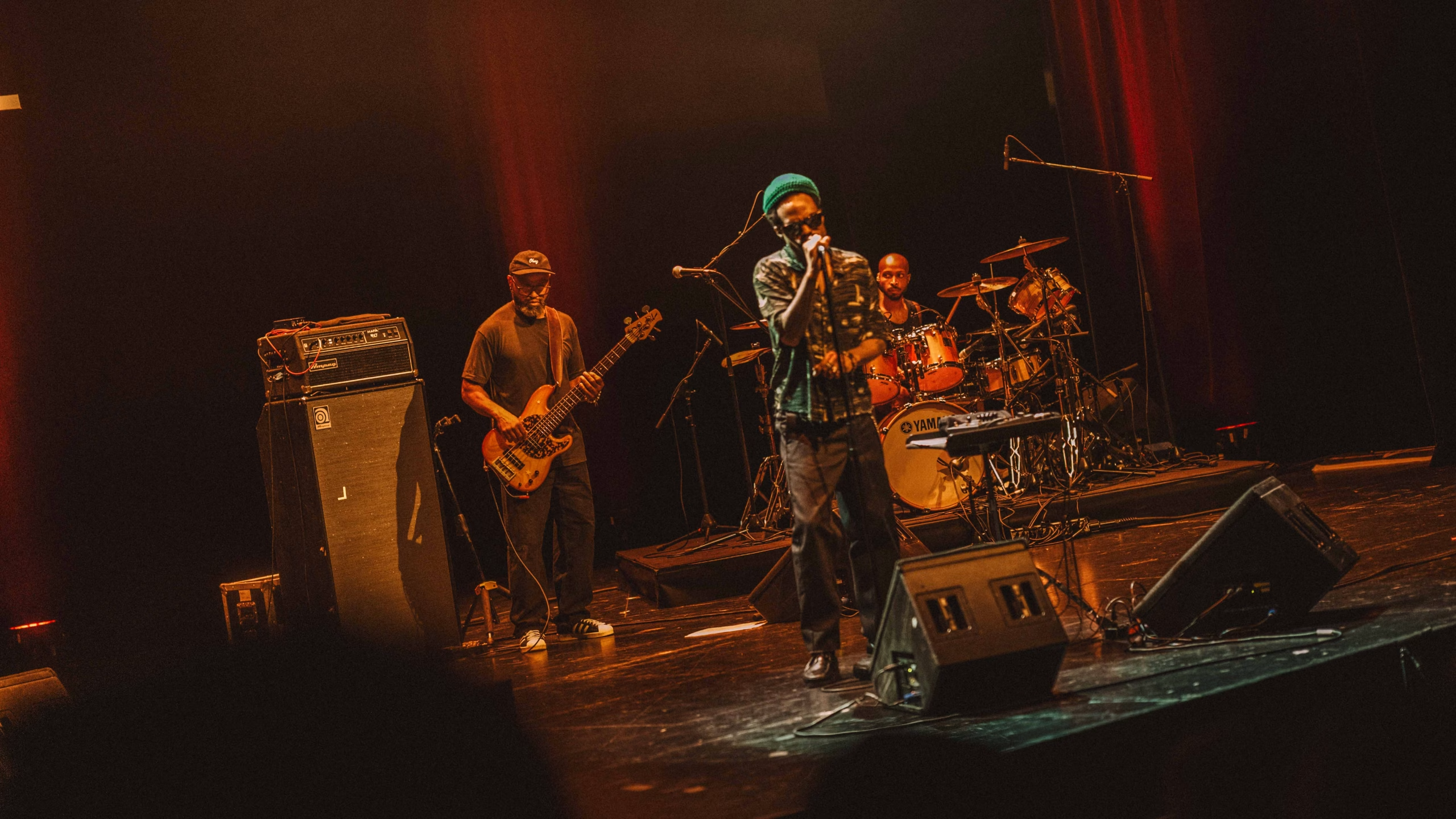

One of the evening’s most memorable moments came when guitarist Randy Runyon stepped forward for a blues-infused solo that briefly shifted the atmosphere of the concert. With a raw, expressive tone and a deep connection to the tradition of blues guitar, Runyon brought a different color to the performance, revealing the breadth of the musicianship within Bilal’s band.
Introducing one of the songs, Bilal mentioned that it had been co-written by guitarist Randy Runyon and Robert Glasper during their time as roommates in a college dorm. It was a brief anecdote, but one that quietly underscored the close ties between the musicians who continue to shape today’s jazz and soul landscape.
The interaction between Bilal and his musicians was one of the defining features of the evening. The band provided a rock-solid rhythmic foundation, locking into deep, infectious grooves that perfectly supported Bilal’s expressive vocal delivery. Clearly immersed in the music, he frequently surrendered to the moment, breaking into spontaneous dance moves between verses. At one point, so caught up in the performance, he rushed back toward the microphone to catch the next lyric, accidentally knocking over the microphone stand. Without missing a beat, Bilal simply carried on singing, the minor mishap becoming another reminder of how completely absorbed he was in the performance.
The audience followed every turn. Cheers erupted throughout the performance, and after each song the applause grew louder. By the closing moments, Linhart Hall in Cankarjev dom responded with a sustained standing ovation, reluctant to release the musicians who had transformed the venue into a space where soul, jazz, and improvisation could exist as one continuous conversation.
Bilal’s performance was a reminder that his greatest strength has never been a single style or genre. It is his ability to move between them—and to make every transition feel natural.
