

Bill Charlap Trio at Zig Zag Jazz Festival: A Masterclass in the Art of Listening
The ZigZag Jazz Festival, Gasometer, Berlin – July 23, 2026
There are few musical settings as rewarding as a great piano trio. At its best, it combines intimacy with orchestral depth, allowing every nuance of touch, dynamics, and interaction to become part of the performance. Yet such moments are becoming increasingly rare in an era dominated by amplification and visual spectacle. Bill Charlap’s appearance at the Zig Zag Jazz Festival in Berlin was one of those occasions where closing your eyes almost felt like listening to a perfectly engineered studio recording—except everything unfolded live, naturally, and with an immediacy no recording can fully capture.
Joined by bassist David Wong and drummer Carl Allen, Charlap delivered a performance that celebrated not only the Great American Songbook but also the art of listening. While Charlap is perhaps best known for his long-standing trio with Peter Washington and Kenny Washington, his career has also extended far beyond the piano trio format. His collaborations with vocalists—including the Grammy Award-winning albums with Tony Bennett and, most recently, last year’s Elemental with Dee Dee Bridgewater—reflect an understanding of songs that reaches beyond harmony and improvisation into storytelling itself. That perspective shaped the entire evening.




Playing the Songbook as Songs
Throughout the concert Charlap did far more than introduce compositions. He spoke about their composers, shared stories behind the music and, perhaps most revealingly, recited lyrics before performing several of the pieces. It was a reminder that these standards were written as songs long before they became jazz vehicles, and that understanding the words can profoundly influence an instrumental interpretation.
That philosophy became evident from the opening pair of tunes which, as Charlap jokingly pointed out, both had “dance” in their titles: Jule Styne’s Dance with Me and Cole Porter’s Dream Dancing. Rather than treating them simply as familiar standards, the trio shaped each melody with the phrasing and pacing of a vocalist, allowing every musical sentence to breathe naturally.
Charlap’s understanding of the repertoire became even more evident as the evening continued. Harold Arlen’s Out of This World offered another glimpse into his way of interpreting standards. The trio approached the piece with a Latin-infused arrangement, giving the familiar melody a different rhythmic character while preserving its lyrical quality. After the performance, Charlap recited Johnny Mercer’s lyrics, reminding the audience that these compositions were written as songs before they became part of the jazz repertoire.
Later, Billy Strayhorn’s Lush Life became an especially moving moment. Performing the verse alone, Charlap drew attention not only to Strayhorn’s extraordinary music but also to the remarkable maturity of lyrics written when the composer was only eighteen years old. He pointed out Strayhorn’s refusal to rely on predictable rhymes, highlighting the famous closing lines:
“And there I’ll be while I rot with the rest
Of those whose lives are lonely, too.”
Hearing the words before the performance gave the instrumental interpretation a deeper emotional context.
Three Musicians, One Acoustic Sound
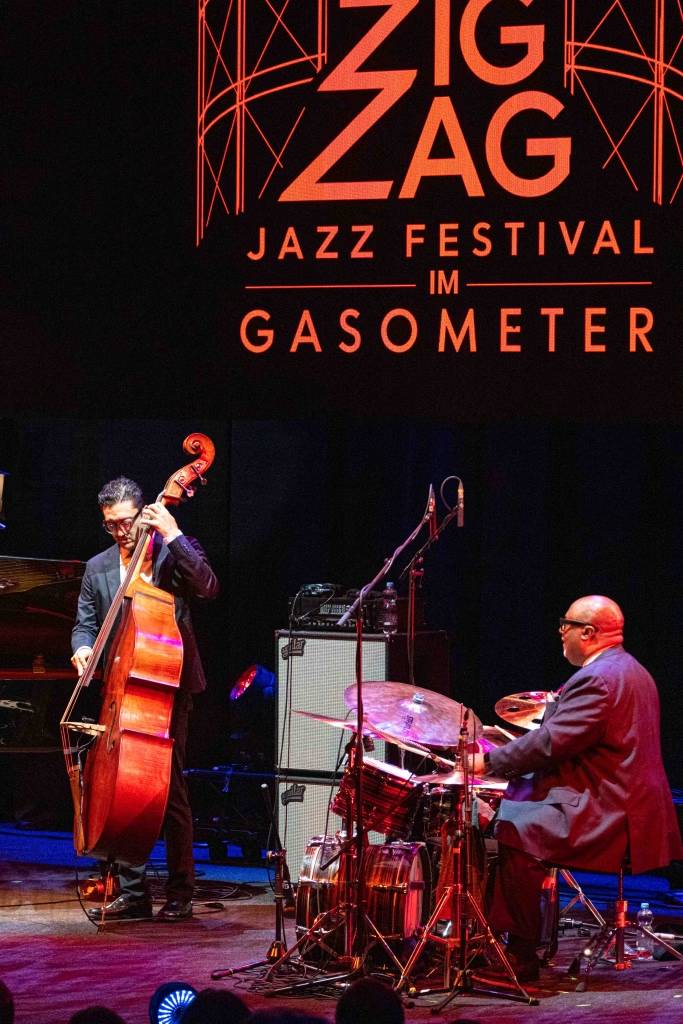
Equally remarkable was the sound itself. The trio performed without stage monitors, relying entirely on the natural acoustics of the Gasometer and their ability to listen closely to one another. The result was a level of transparency rarely encountered in contemporary concert settings. Every note of Charlap’s piano carried effortlessly through the hall, while Wong’s bass remained warm and clearly defined, and Allen’s drums retained remarkable detail even at the softest dynamics.
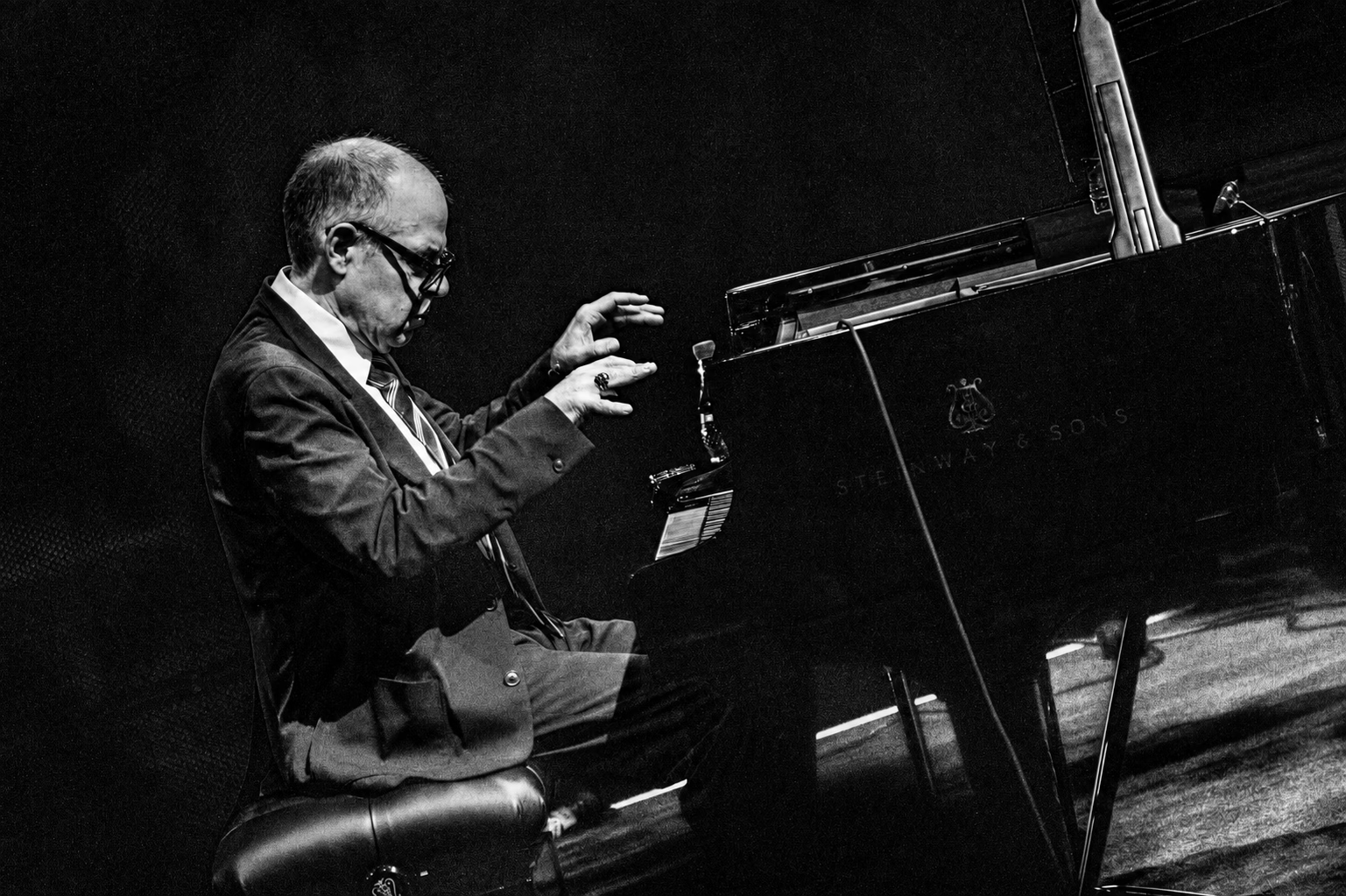
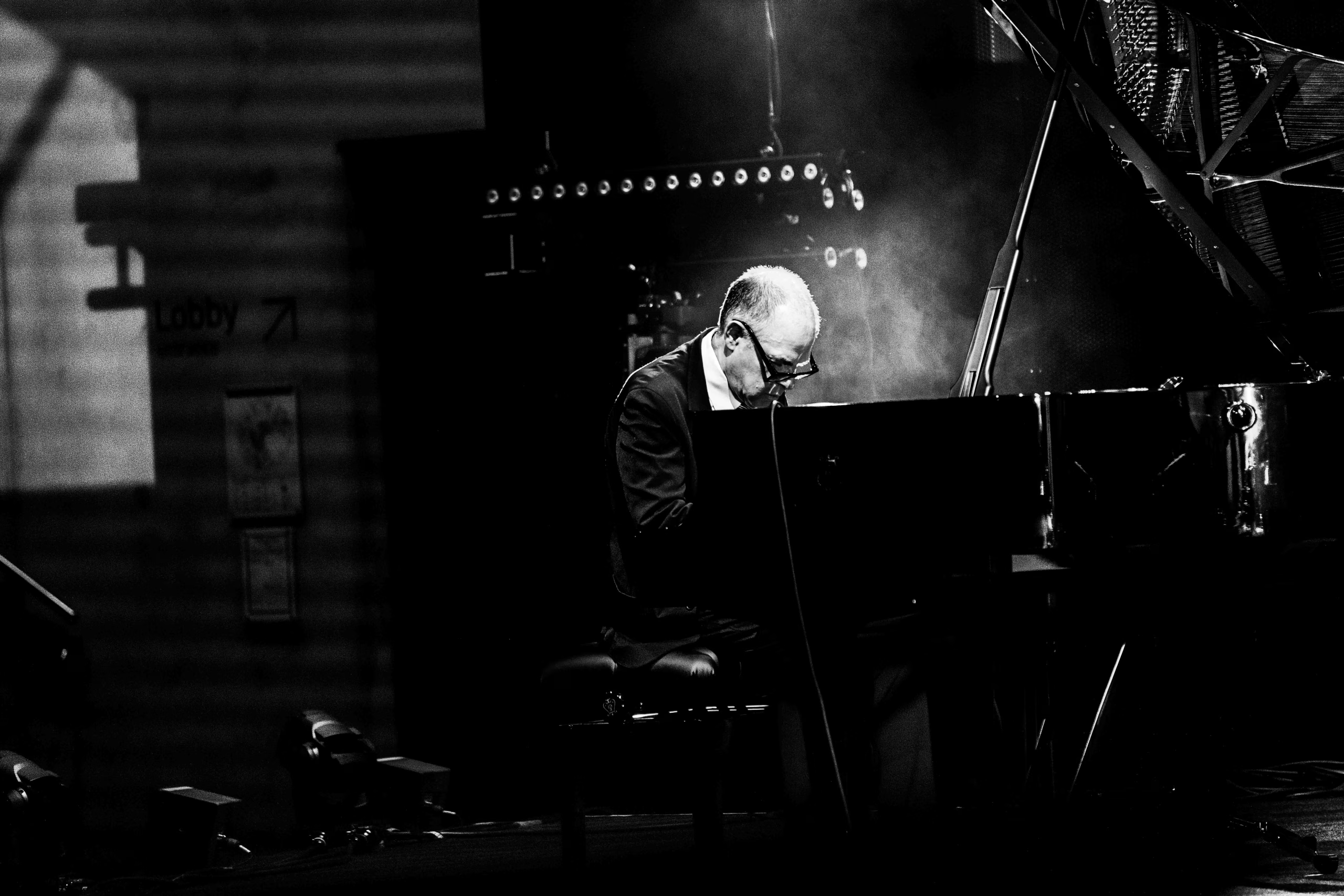
Charlap joked early in the evening that “there’s something wrong with the piano—it only has one big black key.” From the audience’s perspective, with the keyboard almost entirely hidden, it sometimes seemed as if the music was simply appearing from the instrument, as though he was drawing colours from a surface rather than physically playing the keys.
Behind that illusion stood extraordinary musicianship. Allen constantly shaped the trio’s dynamics, moving naturally between the delicate swing of brushes and the sharper articulation of sticks. Whether creating a subtle rhythmic pulse or adding forward momentum, he remained fully connected to the musical conversation rather than simply providing accompaniment. Together with Wong’s warm, precisely placed bass lines, he created the ideal foundation for Charlap’s piano to breathe and develop freely.
That sense of dynamic control became especially clear when the trio moved into Leonard Bernstein’s Some Other Time. After the rhythmic energy and colour of the earlier repertoire, the ballad created a moment of complete openness. Its lush and transparent sound filled the Gasometer without ever becoming heavy or forced, revealing one of the trio’s greatest strengths: the ability to create a rich acoustic presence while maintaining intimacy and restraint.

Virtuosity in Service of the Music
The second half explored another side of the trio. Three Duke Ellington and Billy Strayhorn compositions demonstrated just how naturally technical brilliance could become part of musical storytelling rather than an end in itself.
I’m Beginning to See the Light carried a relaxed blues-infused groove, while Caravan exploded into a breathtaking up-tempo performance. Wong propelled the trio with razor-sharp walking bass lines as Charlap navigated impossibly fast passages with complete clarity and control. Yet despite the astonishing technique on display, nothing felt like a display of virtuosity for its own sake. Every line served the architecture of the music.
The contrast that followed was even more striking. Lush Life returned the audience to complete stillness before the trio concluded the main set with Bill Evans’ early composition Very Early. Without allowing the atmosphere to settle, Charlap counted off Dizzy Gillespie’s Woody ‘n You while the final chord of the previous tune was still resonating, creating a spontaneous transition that perfectly captured the trio’s relaxed chemistry.
The enthusiastic response brought the musicians back for an encore, where Stardust provided a gentle and elegant conclusion to the evening.
A Reminder of Why Acoustic Jazz Still Matters
In a world where music increasingly competes with screens, notifications and constant distraction, Bill Charlap’s trio offered something refreshingly uncomplicated: three master musicians, one acoustic piano, and complete trust in the music itself.
The concert demonstrated that virtuosity is most compelling when it remains almost invisible, embedded within thoughtful interpretation and genuine interaction. Charlap’s deep understanding of the Great American Songbook—shaped as much by its lyrics as by its harmonies—gave familiar standards renewed meaning, while David Wong and Carl Allen provided the kind of intuitive support that only comes from exceptional musicianship and attentive listening.
Performances like this remind us that a piano trio needs no visual spectacle to leave a lasting impression. When musicians listen this deeply to one another, the result is something technology still cannot reproduce: the feeling of sharing a room with artists creating beauty together, one note at a time.
Comments are closed.