

Ledisi Brings Dinah Washington’s Spirit Into the Present at The ZigZag Jazz Festival

There are many reasons musicians make music. It can be an act of personal expression, a way to entertain, a celebration of life, or a tribute to those who shaped their artistic path. The most powerful performances often emerge when all of these motivations meet — when respect for tradition becomes a starting point rather than a limitation.
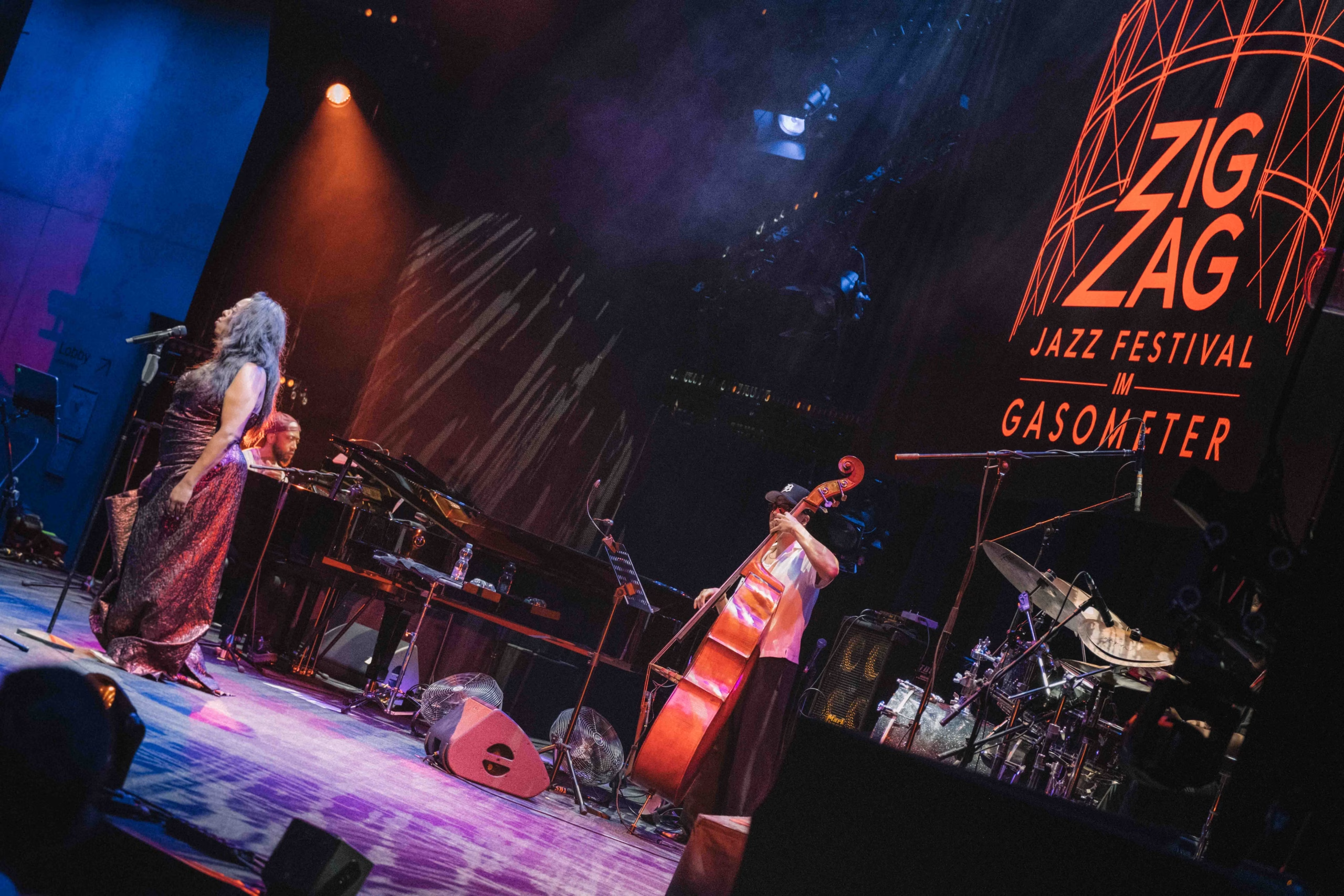
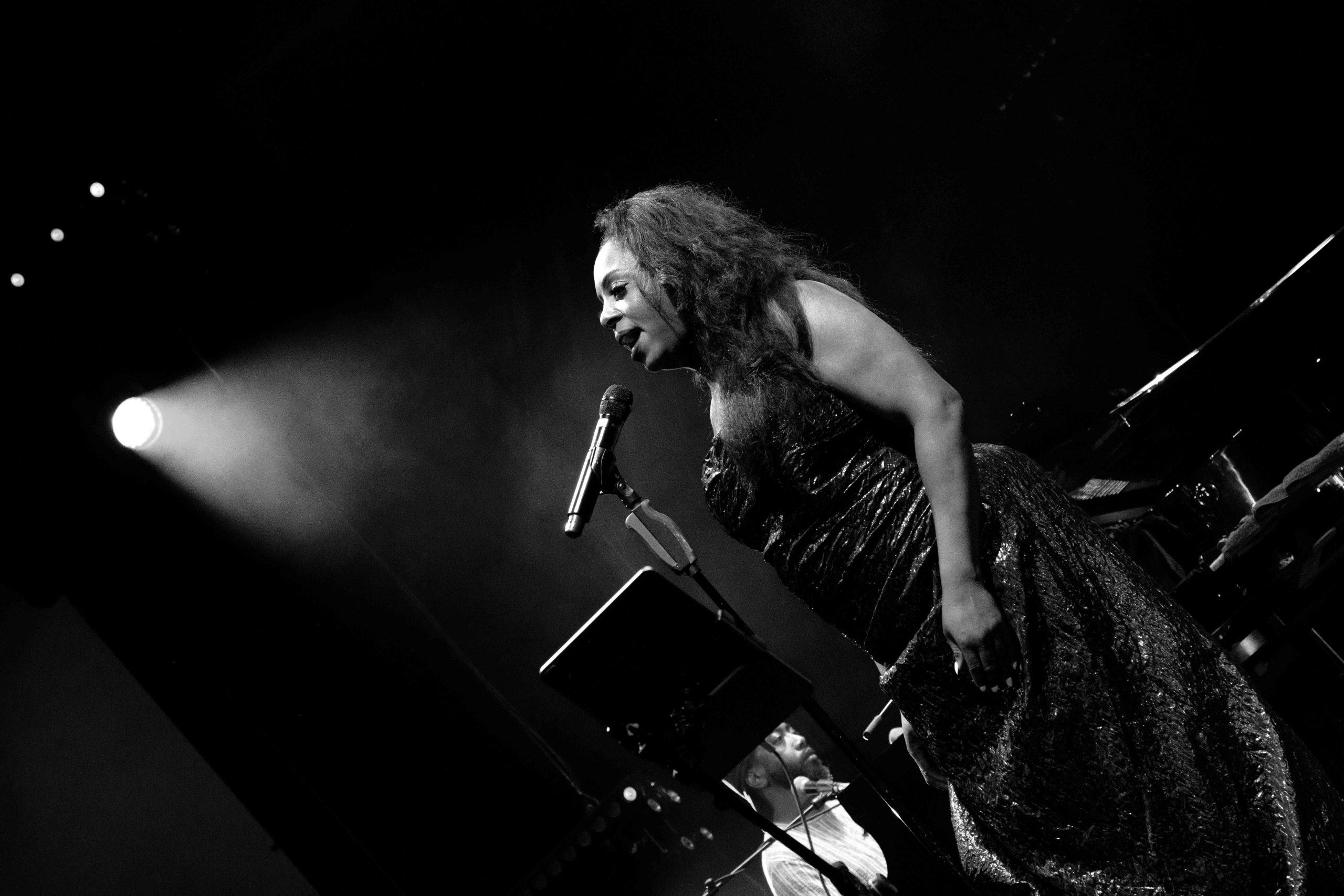
This was exactly the feeling on the third night of this year’s Zig Zag Jazz Festival in Berlin, when Ledisi transformed the intimate hall of Gasometer into a jazz club. Although she is widely recognized as a Grammy Award-winning R&B vocalist, her current project is rooted in a different chapter of music history: a tribute to the legendary Dinah Washington. Yet Ledisi’s approach was never about imitation. Instead, she brought Washington’s repertoire into the 21st century through her own voice, phrasing, and musical identity.
Supported by pianist Brandon Waddles, bassist Brandon Rose, and drummer Joshua Watkins, Ledisi presented a program that respected the tradition while allowing every song to breathe as a contemporary performance.




From Concert Hall to Jazz Club
The transformation was immediate. As the quartet opened with the jazz standard Our Love Is Here to Stay, the 500-seat Gasometer hall suddenly felt like a much smaller jazz venue. The dry, intimate vocal sound placed every detail of Ledisi’s phrasing in focus — every subtle accent, embellishment, and shift in dynamics.
The band responded with the same sense of intimacy. Rather than simply accompanying the singer, Waddles, Rose, and Watkins created a flexible musical environment where swing, space, and interaction shaped the interpretation.
Introducing her tribute album For Dinah, produced by legendary bassist Christian McBride, Ledisi explained that the goal was not to recreate Washington’s voice but to honour her spirit while remaining herself. The following performance immediately proved that philosophy.
On the blues-infused Never Got to Heaven and the ballad You Don’t Know What Love Is, Ledisi was unmistakably Ledisi — moving freely between power and vulnerability, shaping melodies with a personal vocabulary developed through decades of gospel, jazz, and R&B influences.
A Band That Moves With Her
Such freedom requires musicians who can follow every direction, and Ledisi’s quartet proved perfectly equipped for the task. The group moved effortlessly between styles without losing its identity.
Brandon Rose provided a foundation that was both powerful and adaptable, switching naturally between double bass and electric bass. His introduction to You Don’t Know What Love Is, performed together with Ledisi before the rest of the band entered, created one of the evening’s most intimate moments. Later, his bass solo revealed him not only as a supportive accompanist but as a confident improviser.
On Dinah Washington’s iconic What a Difference a Day Makes, Brandon Waddles delivered one of the evening’s standout solos. Without becoming a separate feature, his improvisation remained connected to the song’s emotional direction, using layered lines and rhythmic ideas to expand the arrangement.
Ledisi affectionately described her musicians as “Detroit people and Aquariuses,” but their connection went beyond shared background. On Nobody Knows the Way I Feel, a song recorded by both Dinah Washington and Aretha Franklin, the band shifted into a gospel-inspired atmosphere, driven by Waddles’ powerful piano figures and Watkins’ deep groove. As Ledisi put it herself: “Take me to church.”
Between Dinah Washington and Ledisi
One of the clearest examples of Ledisi’s ability to honour tradition while remaining completely individual came with You Go to My Head. Originally recorded with guitarist Paul Jackson Jr., Ledisi performed the song in a duo setting with Waddles, creating a fragile conversation between voice and piano.
The pianist’s accompaniment was never simply background support. He followed Ledisi’s phrasing closely, responding to every pause and emotional shift. Their connection turned the ballad into a shared interpretation rather than a vocal feature with accompaniment.
The group then demonstrated its versatility once again with Ledisi’s own Grammy-nominated song Love You To. Moving into a tight R&B groove, Rose switched to electric bass and delivered a strong solo while Watkins navigated rhythmic changes with precision. Ledisi engaged the audience through call-and-response before finishing with a powerful vocal cadenza, supported by Waddles’ equally responsive piano work.
The energy continued with Duke Ellington’s Caravan, where Ledisi revealed another side of her musicianship. With playful confidence she commented, “Dinah did not scat, but I do,” before launching into a virtuosic display of vocal improvisation. The audience responded immediately as the band pushed the intensity higher.
A Message That Remains Timeless
After the excitement of Caravan, Ledisi returned to a quieter emotional space with This Bitter Earth. The song’s message — questioning the meaning of love in a world where it is not shared — remains deeply relevant decades after its release. Ledisi connected the lyrics to her own belief in hope and love, while Waddles’ piano solo felt less like a separate improvisation and more like an extension of her vocal expression.
The regular set concluded with BLKWMN, Ledisi’s tribute to the Black women artists who inspired her, including Ella Fitzgerald, Mahalia Jackson, Aretha Franklin, Nina Simone, and Dinah Washington. The powerful lyrics connected her own artistic journey with the legacy she was celebrating. The closing selection, Ellington’s Do Nothing Till You Hear from Me, brought the tribute full circle.
The audience naturally demanded more, and Ledisi returned for one final intimate moment with her original song Alright. She shared that she wrote the song during a period when she considered leaving the music industry and pursuing a career in teaching. Instead, she continued creating, and her career became a testament to persistence and artistic confidence.
Ending the evening with a voice that moved effortlessly between jazz, gospel, R&B, and even classical influences, Ledisi showed that the strongest tribute to the artists who came before her is not imitation — it is carrying their spirit forward while remaining completely authentic.

Comments are closed.