Matt Dwonszyk – Live At The Side Door
A Band Built on Shared History
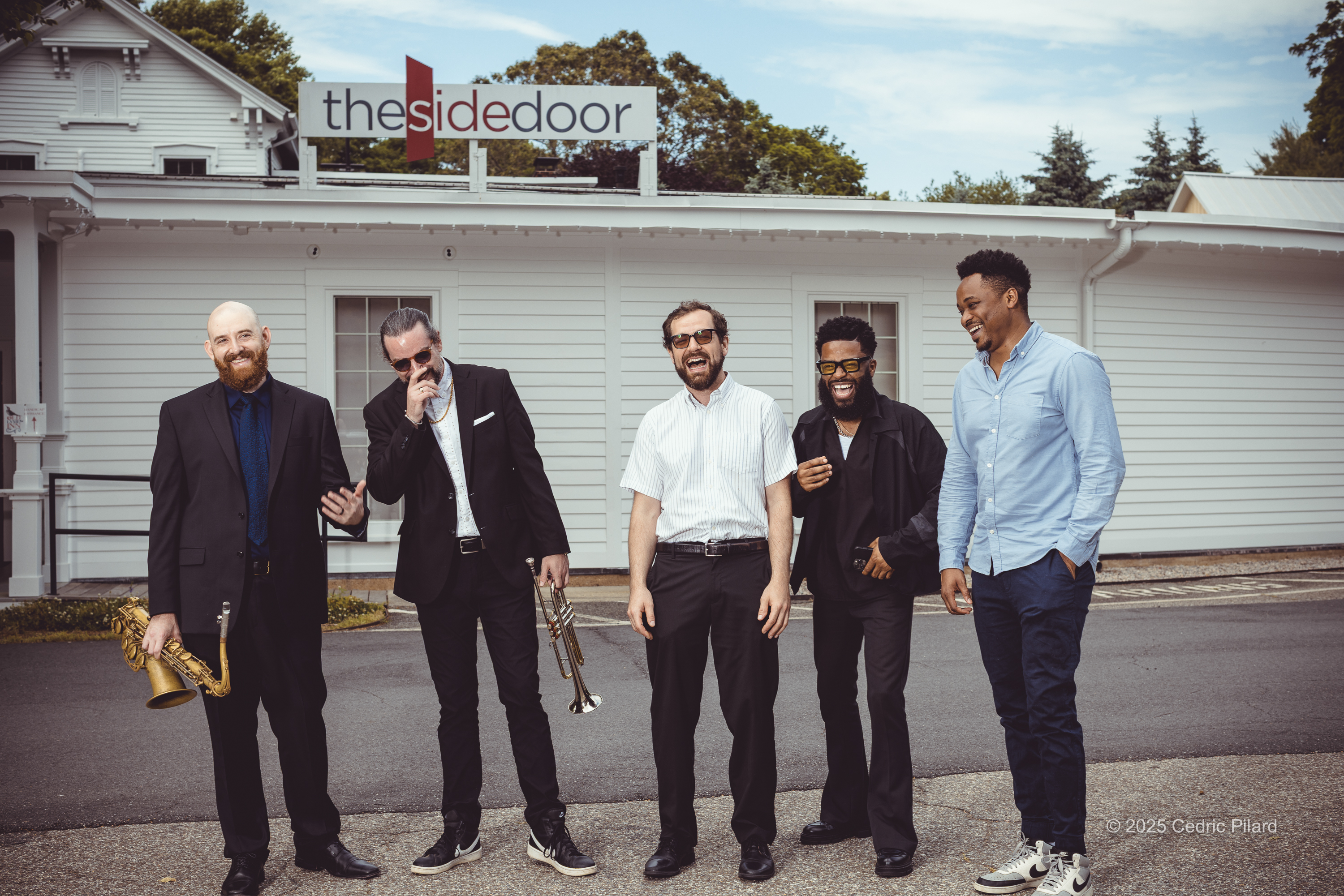
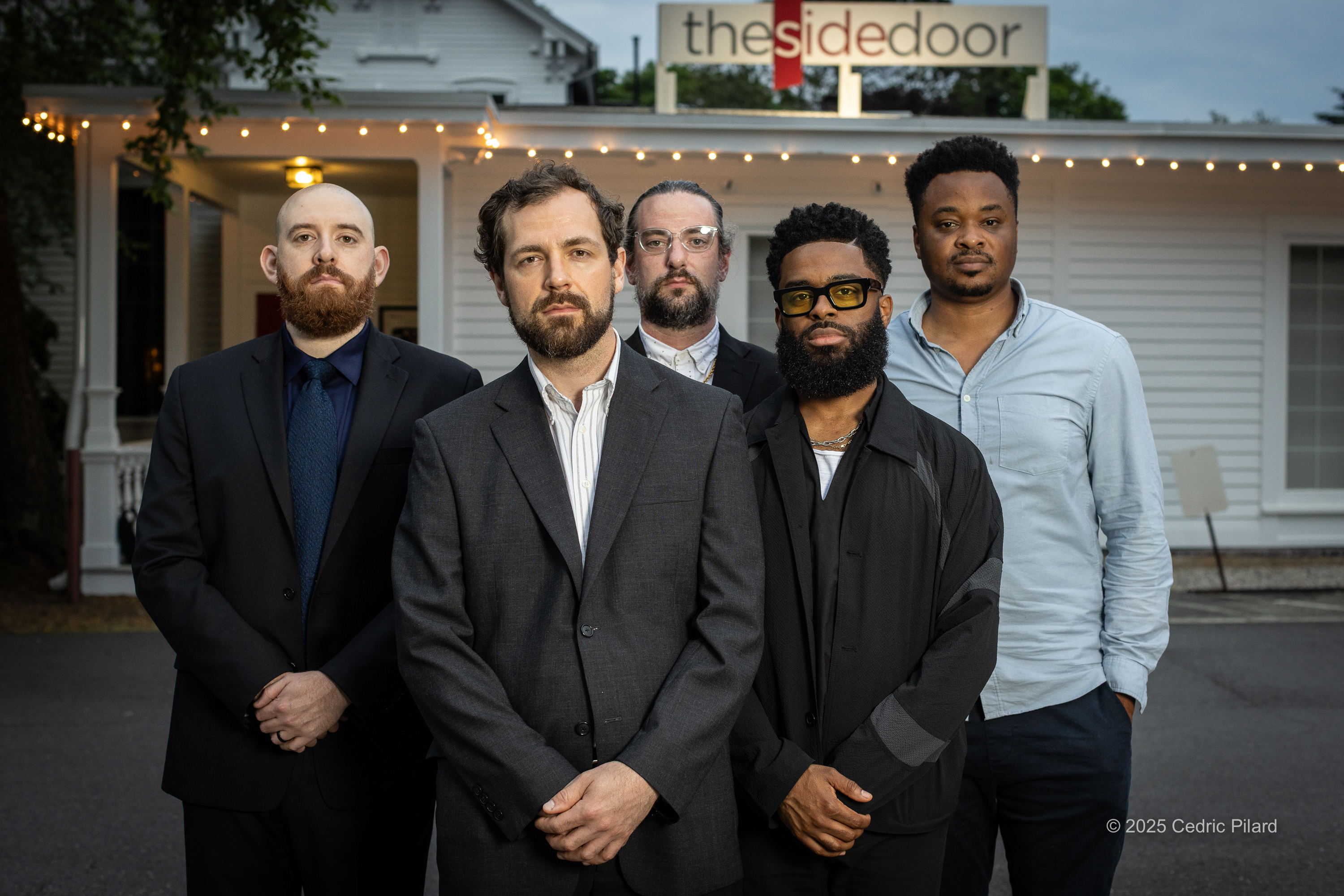
With Live at the Side Door, bassist Matt Dwonszyk captures a quintet whose deep musical connection comes from years of playing together. The group—trumpeter Josh Bruneau, tenor saxophonist Matt Knoegel, pianist Taber Gable, drummer Jonathan Barber, and Dwonszyk himself—shares roots in the Hartford jazz scene and the Jackie McLean Institute of Jazz. That history is immediately audible. Rather than sounding like a project assembled for a recording session, this band moves with the instinctive timing and trust that only develops through countless gigs together. The album’s repertoire consists almost entirely of Dwonszyk’s compositions, with the exceptions of “Gloomy Sunday,” the 1933 ballad by Hungarian pianist Rezső Seress, and “Frederiksplein” by K. Rome, highlighting both the leader’s compositional voice and his thoughtful selection of material.
The result is a live album driven less by individual spotlight moments than by collective momentum. From the first tune onward, the audience’s audible responses make it clear that the energy in the room is feeding directly back into the band’s playing. Dwonszyk’s bass anchors the ensemble throughout, forming a flexible rhythmic core with Barber’s responsive drumming and Gable’s harmonically active piano.
Momentum from the Opening Note
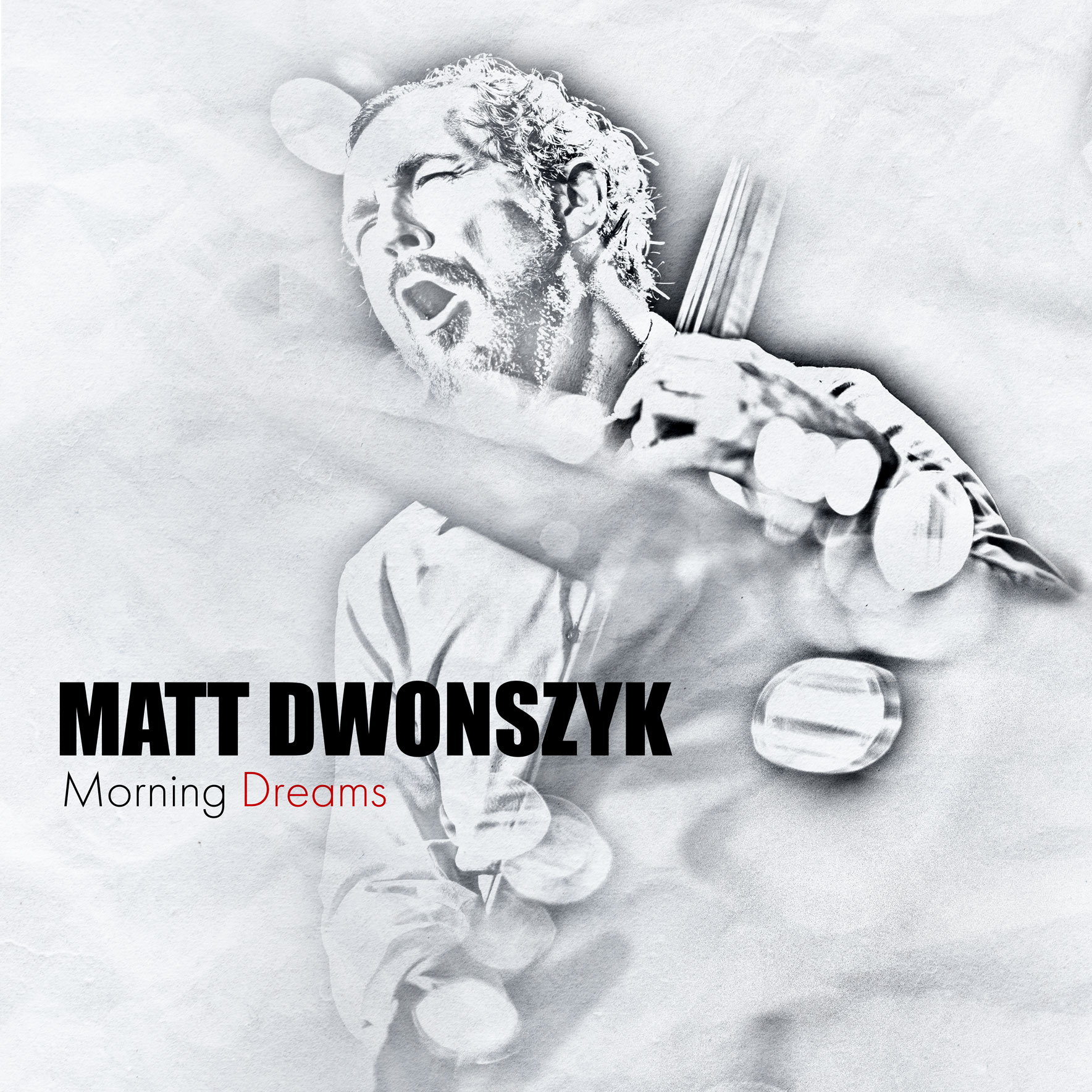
The album opens with “Morning Dreams,” a modal piece that quickly establishes the quintet’s energy. Dwonszyk and Barber create a flowing rhythmic foundation over which the horns state the theme in tight coordination. Bruneau’s trumpet solo develops through rhythmic motifs rather than dense harmonic runs, while Knoegel’s tenor responds with a more expansive, high-energy approach. Gable’s piano bridges the transitions between soloists, using block chords and rhythmic accents that keep the ensemble momentum intact.
A similar sense of flow shapes “Frederiksplein,” which relaxes the tempo but maintains forward motion through a buoyant groove. The piece highlights the group’s ability to shape dynamics collectively. Knoegel’s spacious tenor phrasing contrasts with Bruneau’s gradually intensifying trumpet solo, while the rhythm section subtly adjusts the underlying pulse to support each soloist’s direction.
Rhythmic Variety and Ensemble Interaction
Several compositions explore different rhythmic frameworks without losing the quintet’s cohesive feel. “Stage Dive” shifts between a Latin groove and swing, allowing soloists to move fluidly between rhythmic languages. Dwonszyk’s bass remains the central pivot in these transitions, maintaining continuity even as the groove changes. Elsewhere, pieces like “Billy’s Den” lean more directly into the hard-bop tradition. The tune’s riff-based structure provides a natural platform for extended improvisation and showcases the tight connection between Dwonszyk, Barber, and Gable. Their interaction during the piano solo demonstrates the kind of conversational accompaniment that cannot be rehearsed into existence—it grows from shared experience on the bandstand.
Space, Texture, and Contrast
The album also makes room for quieter textures. The ballad “Ms. Smith,” following the brief “Gloomy Sunday,” reveals another side of the quintet’s sound. Dwonszyk’s bowed bass introduction sets a spacious tone before the horns enter with a restrained melodic statement. The rhythm section plays with notable restraint here, allowing the melody and solos to unfold without crowding the sonic space.
“White Butterfly,” a waltz featuring muted trumpet, adds further contrast. The change in meter and timbre refreshes the album’s pacing while maintaining the group’s characteristic interplay.
A Live Recording That Feels Alive
By the time the band reaches the fast swing of “Alexandre the Great” and the modal closer “Mode for Rene,” the collective energy is fully evident. Solos stretch further, rhythmic accents become more playful, and the audience’s audible reactions underline the immediacy of the performance. Credit is also due to recording engineer Nick Sexton, whose capture of the performance preserves the clarity of each instrument while retaining the atmosphere of the club. Dwonszyk’s bass in particular comes through with warmth and detail, reinforcing its central role in the ensemble’s sound.
The Sound of a Working Band What ultimately makes Live at the Side Door compelling is the sense of a working band in its natural environment. Dwonszyk leads from the center of the rhythm section, shaping the music through groove, tone, and interaction rather than overt direction. Around him, Bruneau, Knoegel, Gable, and Barber respond with the ease and responsiveness of musicians who have spent years listening to one another. The audience’s audible reactions—bursts of approval after solos and climactic moments—become part of the album’s momentum, reinforcing the atmosphere of a packed jazz club fully engaged with the music. More than anything, Live at the Side Door captures the immediacy of a jazz club performance—the risk, the responsiveness, and the collective lift that emerges when musicians and audience share the same room.