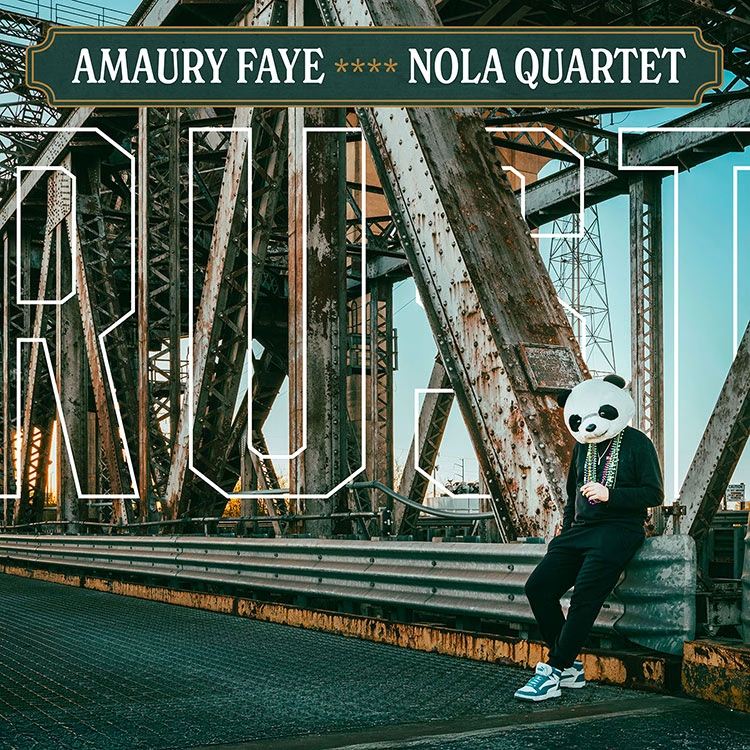
Amaury Faye – RUST

The final stretch of the year tends to arrive with an overload of releases, making it difficult for new albums to truly stand out. RUST, the latest release by French pianist and composer Amaury Faye, self-released on November 14 and produced by Clearway Prod., did exactly that. What initially comes across as an immediately engaging, groove-driven record gradually reveals itself as a carefully constructed and deeply considered compositional statement.
Written entirely by Faye, RUST is conceived as a tribute to New Orleans — not from a distant or touristic perspective, but through close observation of the city’s musical language and rhythmic identity. Rather than quoting tradition directly, Faye internalizes elements of ragtime, blues, gospel, and early jazz forms and reframes them through a contemporary compositional lens. The result is music that feels grounded and historically aware, yet unmistakably current.
A rhythm section rooted in New Orleans
For this project, Faye assembled a lineup that plays a crucial role in shaping the album’s sound. Herlin Riley, whose New Orleans groove is both deeply rooted and endlessly flexible, anchors the music with authority and elegance. Bassist Amina Scott, a frequent collaborator of Riley, provides a solid yet responsive foundation, while tenor saxophonist Julian Lee brings a warm, blues-inflected tone balanced by modern phrasing.
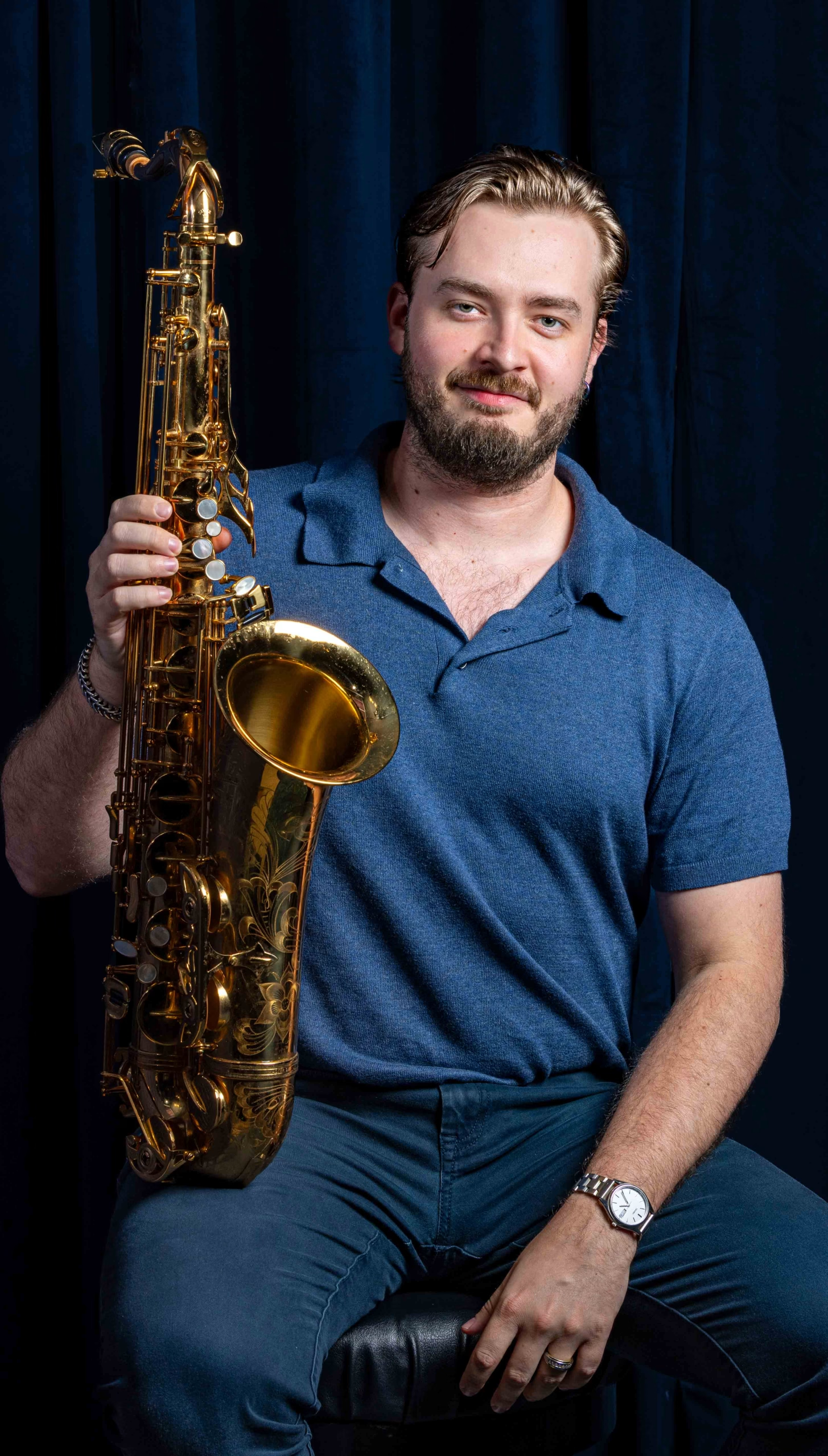

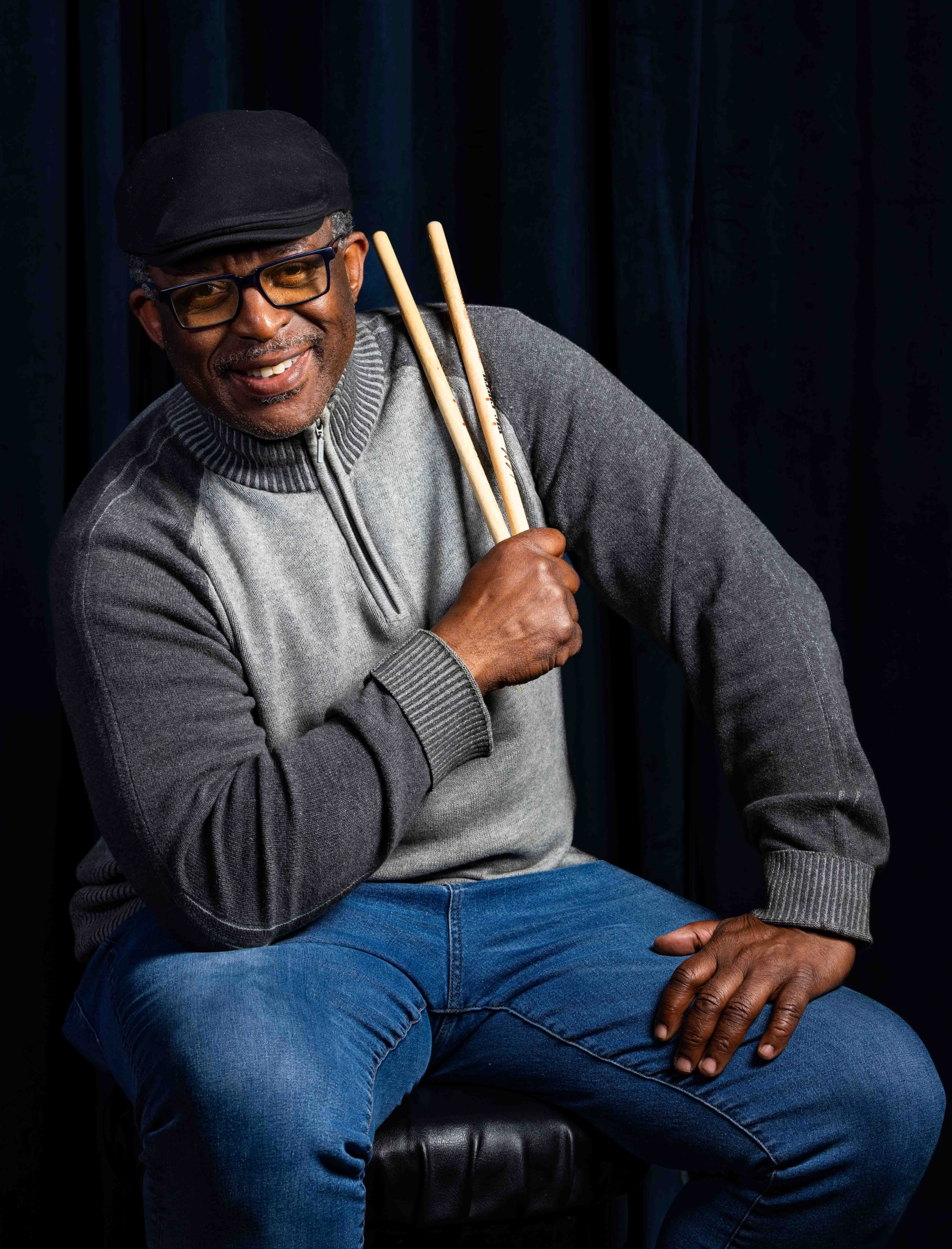
The chemistry of the rhythm section is evident from the opening track, “Sirens of the Crescent City.” Built on an ostinato figure, the piece establishes a clear rhythmic framework that allows the ensemble to breathe. Lee’s tenor lines interlock naturally with Riley’s cymbal work, while Faye’s comping remains precise and supportive, never crowding the soloist. The improvisation unfolds over a minimal harmonic field, highlighting interaction rather than harmonic density. A return to the theme reinforces the album’s focus on composition and form rather than individual display. Credit is also due to engineer Mack Major, whose clear and detailed recording captures the full nuance of the ensemble’s dynamic range.
Groove as a compositional engine
“Huckabuck Garden” moves decisively into deep-groove territory. Built on a single-note piano vamp, the piece relies on the rhythmic authority of Scott and Riley to generate forward motion, demonstrating how minimal material can support a fully developed groove.
Lee delivers a blues-inflected solo marked by clarity and economy, followed by Faye’s first extended improvisation on the album. His piano language reflects his trio background, but here it becomes a fully collective statement, with the rhythm section responding actively to every shift in phrasing and articulation.


The title track, “RUST,” introduces a contrasting atmosphere. The arrangement is more spacious, allowing the band’s dynamic sensitivity to come to the foreground. Faye’s harmonic palette opens up, creating a floating quality that feels impressionistic without becoming abstract. The piece functions less as a narrative depiction and more as a musical snapshot — a moment shaped through texture, pacing, and harmonic color.
Tradition reframed through detail
Faye’s early immersion in ragtime comes into sharp focus on “Public Belt Rag.” By leaving out the bass and allowing the piano to assume full responsibility for the low register, the composition achieves an authentic structural balance. Lee and Riley fit seamlessly into the idiom, while Lee’s solo introduces subtle modern inflections that prevent the piece from sounding referential. The piano–drums dialogue that follows feels tightly locked, with Riley’s cymbal work during the trading sections adding a playful, old-school energy.
“The Barges Blues” continues the album’s emphasis on groove and restraint. A boogaloo feel underpins the track, with Faye blending ragtime gestures, blues phrasing, and contemporary vocabulary in his solo. Once again, the musicians resist overplaying, keeping the focus firmly on collective sound and forward motion.
Precision, dynamics, and contrast
On “The Railyard,” Faye’s rhythmic precision comes to the forefront. The sharply articulated unison passages suggest a level of ensemble cohesion that belies the short preparation time before recording. His piano solo here leans toward a more modern vocabulary, revealing influences without losing a distinct personal voice.
“Walking the Levee” opens with Riley establishing a strong rhythmic framework, over which bass and piano lines unfold with clarity. Lee takes an extended solo, followed by Faye, who balances rapid passages with concise motivic development. The use of double lines adds textural interest without disrupting the groove-driven core of the piece.
The album briefly shifts focus on the ballad “The Old Empress in the Gloaming.” Here, Riley loosens his role, allowing Faye to guide the time, while Scott locks in subtly and precisely. This change in approach creates space for Lee’s lyrical statement and offers a moment of reflection within the album’s broader rhythmic arc.
Closing statement
RUST concludes with “Sweet Chaotic and Vibrant,” a solo piano piece that feels like a personal postscript. Free of ensemble interaction, Faye distills the album’s themes into a concise, intimate statement. It functions almost like final credits music — understated, reflective, and compositionally assured.
Final thoughts
RUST is an album that rewards repeated listening. Its appeal lies not only in its strong groove and clear production, but in the consistency of its musical intent. Every compositional choice, performance decision, and interaction serves the collective sound. By prioritizing feel, form, and ensemble balance over virtuoso display, Amaury Faye and his collaborators deliver a record that feels deeply connected to jazz’s origins while speaking with a contemporary voice. Looking back at 2025, it stands as one of the year’s most satisfying releases and a compelling statement from a composer-pianist clearly coming into his own.
You can listen to and buy album here.